Glass-Front Wardrobes: Balancing Display and Hidden Storage
News Details
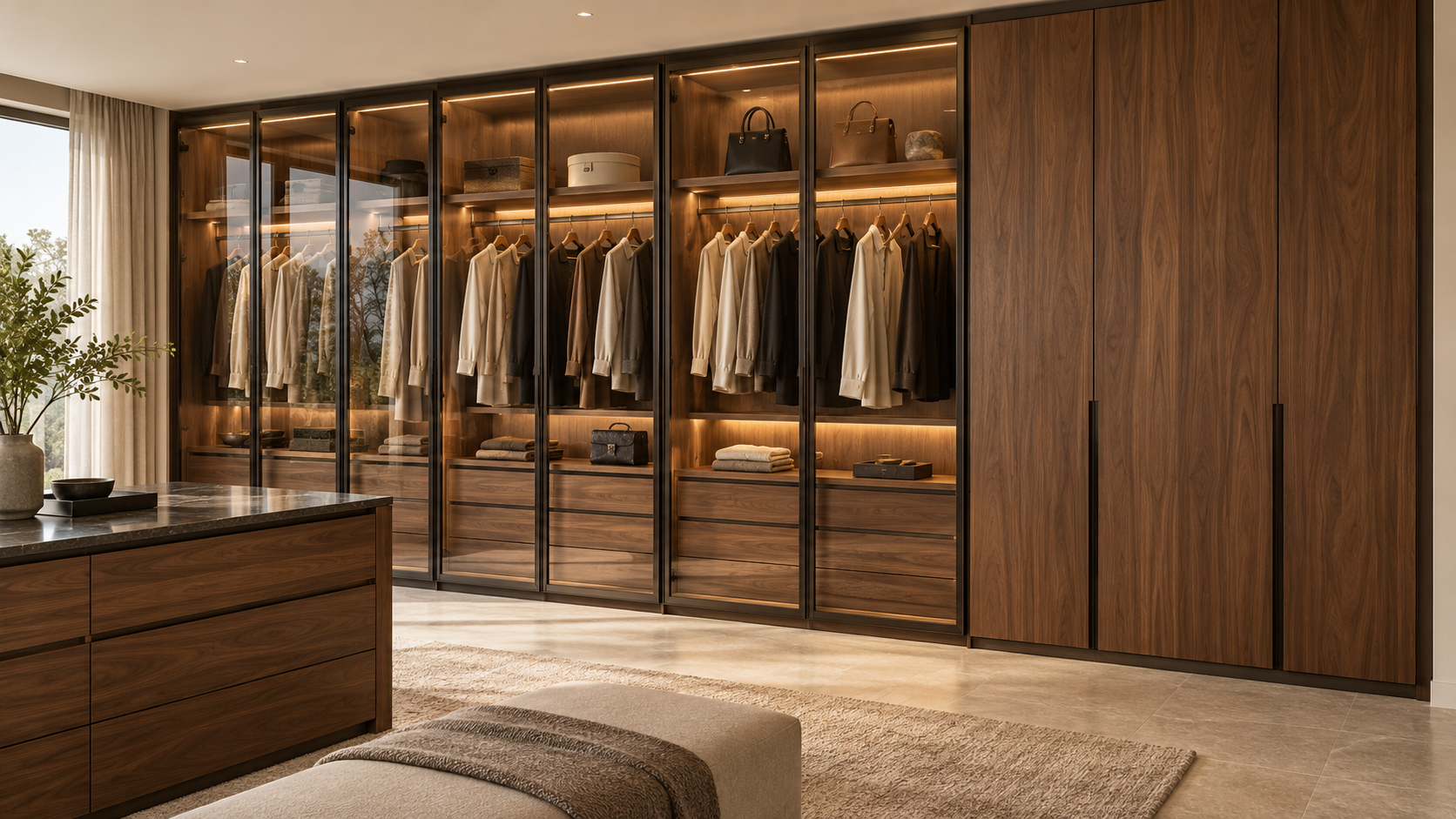
A glass-front wardrobe can turn everyday storage into part of the interior design. Clothing, bags, and accessories remain visible, while slim frames give the furniture a clear structure. However, a wardrobe must also hold items that owners prefer to keep out of sight.
For designers, developers, and fit-out buyers, the challenge is to balance display with practical storage. Too much clear glass can expose clutter. Too many solid fronts can hide the materials and details that make the design distinctive.
The best starting point is a storage plan that reflects how the room will be used.
Why Choose a Glass Door Wardrobe?
A glass door wardrobe allows users to see selected contents without opening each section. It can highlight an organized clothing collection and show the texture of interior wood finishes.
Compared with open shelving, glass doors provide a physical barrier against direct contact and some dust. However, standard wardrobe doors are not airtight, so buyers should not assume complete dust protection.
Glass also introduces reflections. Its effect depends on the room’s lighting, viewing angle, and the color of the wardrobe interior. Therefore, evaluate the complete material combination rather than choosing glass from a small sample alone.
MERLUNTI Design Reference: Aluminum, Glass, and Wood
MERLUNTI’s published aluminum and wood wardrobe range combines a reinforced aluminum frame with an open modular layout and glass door options. The company positions this system for walk-in closets and residential interior projects.
This combination provides a useful design reference for buyers. Metal profiles define the cabinet lines, glass reveals selected storage areas, and wood surfaces add warmth.
For a project brief, the key question is how these elements work together. A display bay may suit a glass front, while drawers or solid doors may better serve personal items and mixed storage.
The following planning approach builds on that product concept; it is a proposed layout method rather than a report of a completed installation.
Plan Display and Concealed Storage by Item
Before deciding how many glass doors to include, list what the wardrobe needs to hold.
Some belongings are easy to display neatly. Others need a more private or flexible space.
| Storage need | Suggested approach | Main planning point |
|---|---|---|
| Bags and selected accessories | Glass-front shelves | Check shelf spacing and visibility |
| Frequently worn clothing | Glass-front hanging section | Allow enough depth and hanging height |
| Small personal items | Internal drawers | Check access behind the outer doors |
| Bedding and seasonal items | Solid-front upper storage | Plan practical access |
| Mixed daily belongings | Closed compartments | Allow room for changing storage needs |
There is no fixed display-to-storage ratio for every project. Instead, adjust the balance to the owner’s habits, available space, and willingness to keep visible sections organized.
Choose Glass for Visibility and Privacy
Clear glass offers the strongest view of the contents. Tinted or textured glass can soften that view, although the result varies with lighting and the glass specification.
When comparing options, consider:
- How clearly clothing colors remain visible.
- Whether fingerprints and reflections are distracting.
- How the glass looks with interior lights on and off.
- Whether the chosen finish suits nearby furniture.
- How easily both sides can be cleaned.
Request a larger sample or a sample door where possible. Also, confirm which glass options are available for the selected system.
Glass type, thickness, edge treatment, and safety requirements should be agreed for the door size and destination market. Appearance alone is not enough to approve the specification.
Check the Aluminum Glass Wardrobe as a Complete System
An aluminum glass wardrobe relies on the frame, glass, hardware, and cabinet structure working together.
Slim profiles may look refined, but buyers should also review door stability and operation. A tall or wide door places different demands on its hinges and frame than a smaller one.
Ask the supplier to confirm:
- Approved door dimensions and weight.
- Frame connections and glass retention.
- Hinge or sliding hardware specifications.
- Adjustment allowances.
- Opening clearances.
- Glass and hardware replacement procedures.
If the wardrobe contains internal drawers, check that the outer doors open far enough for the drawers to travel freely. This detail should appear in the shop drawings, especially near walls and corners.
Use Wood Finishes to Connect the Interior
An aluminum wood wardrobe can help connect a glass-front storage area with the rest of the room.
For example, the same wood tone can continue across shelves, drawer fronts, and adjoining cabinetry. Meanwhile, a consistent metal finish can link door frames, handles, and other details.
However, “wood finish” can describe several materials. Confirm whether each component uses solid wood, veneer, laminate, or another surface.
Approve physical samples for color, grain, texture, and gloss. Then review them under the intended room lighting. Where grain is visible across adjoining panels, agree on its direction and acceptable variation before production.
Design Lighting Around the Contents
Interior lighting can make glass-front storage easier to use. It can also draw attention to the wood grain and selected display items.
However, poorly placed lights may reflect strongly in the glass or leave hanging clothes in shadow.
Plan light positions alongside shelves and rails. Also, confirm:
- Cable routes and concealed channels.
- Switching or sensor arrangements.
- Power supply locations.
- Access for maintenance.
- Compatibility with local electrical requirements.
For a proposed layout, lighting a small number of display bays may create a clearer focus than lighting every compartment equally. Confirm the effect with a sample section before approving the full scheme.
Balance Appearance with Daily Maintenance
A wardrobe that looks good in a display image must still work when fully used.
Clear glass makes the interior more visible, so shelf spacing, drawer proportions, and storage accessories become part of the design. Leave enough room for normal use rather than filling every visible area tightly.
At the same time, plan cleaning access around frames, handles, and corners. Ask for care instructions suited to the glass, metal finish, and wood surfaces.
Enclosed storage also needs sensible use. Clothes should be dry before storage, and room moisture should be managed. Glass doors do not turn the wardrobe into a humidity-controlled cabinet.
What B2B Buyers Should Approve Before Production
For bulk orders or custom interiors, an approved sample section can reveal issues that drawings alone may miss.
Check the sample for:
- Frame alignment and consistent door gaps.
- Smooth opening and closing.
- Drawer clearance.
- Glass appearance under project lighting.
- Finish consistency.
- Access to fixings and electrical parts.
Then confirm the final drawings, material schedule, hardware list, and packing requirements.
For export delivery, glass doors and finished panels need suitable protection. Agree on component labels and room references so the installation team can match each part to the correct location.
Prepare Your Glass Door Wardrobe Brief for MERLUNTI
When contacting MERLUNTI, provide the room dimensions, wardrobe layout, preferred frame and wood finishes, and expected order quantity.
Also, identify which items should be displayed and which should remain concealed. Include requirements for glass, internal drawers, lighting, installation, and delivery.
A well-planned glass door wardrobe gives each storage zone a clear purpose. By coordinating visible shelves, concealed compartments, and daily access, buyers can create an interior that remains attractive and useful beyond the showroom.


