Modular Wardrobe Frames: 5 Key Points to Check Before Bulk Orders
News Details
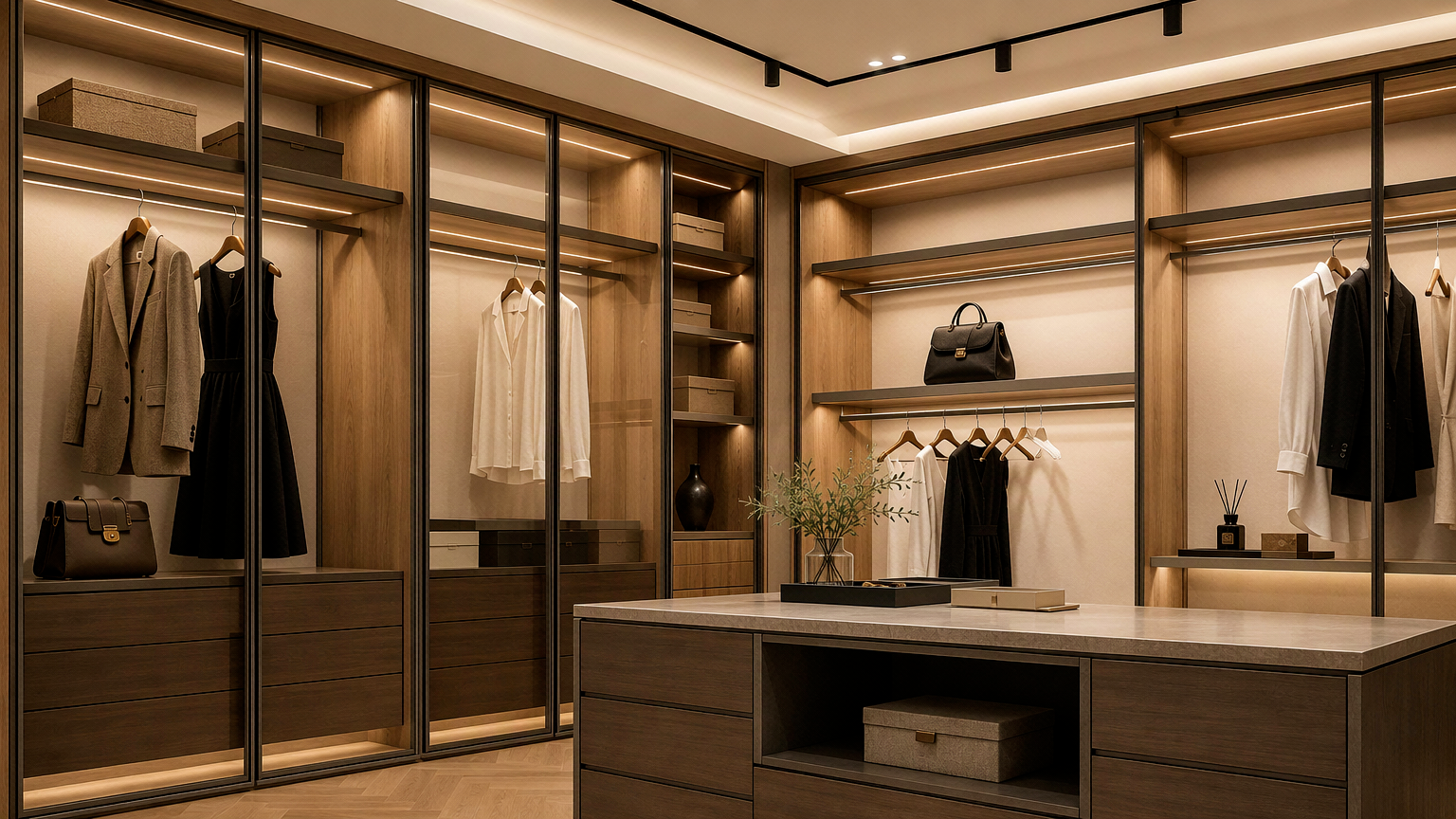
A wardrobe sample may look right in a showroom. However, a bulk order needs more than a good first impression. Frames must fit the rooms, work with the chosen panels, and arrive with the correct parts.
For apartment projects, hotels, and residential developments, small errors can repeat across many units. Therefore, checking the details before production helps reduce delays, extra work, and uneven results.
This article uses an illustrative apartment project to explain what buyers should review. It draws on the modular storage approach shown in Merlunti’s wardrobe collection, which includes aluminum and wood wardrobe options.
The Case: One Wardrobe Design Across Several Room Types
Consider an apartment project with three bedroom layouts. The buyer wants the same warm wood finish and slim metal frame throughout. Yet each room has a different wall width, ceiling height, and storage need.
A single fixed layout may not suit every space. Instead, the proposed modular wardrobe system uses shared frame details with different bay widths and internal fittings.
The purchasing goal is clear: keep the look consistent while making each wardrobe fit its room.
Before placing the order, the buyer needs to confirm which parts can stay the same and which require separate drawings or sizes.
Confirm Room Sizes Before Frame Sizes
Start with site measurements. A floor plan alone may not show uneven walls, skirting boards, beams, or changes in floor level.
For each room type, check:
- Available width, height, and depth.
- Wall and floor condition.
- Skirting boards, sockets, and switches.
- Door swings and nearby furniture.
- Access for delivery and assembly.
Next, agree on fitting gaps and adjustment methods. A frame that matches the wall opening exactly may leave too little room for installation.
In the example project, each room type should have its own approved drawing. This helps prevent one layout from being used in the wrong space.
Check Frame Strength and Support
Slim frames can create a clean look. However, appearance alone does not show how much weight a structure can carry.
Ask the wardrobe frame supplier to confirm the frame material, profile dimensions, joint design, and fixing method. Also, request load limits for shelves and hanging rails in the proposed configuration.
These checks should reflect real use. A long shelf filled with folded clothes places different demands on the frame than a short display shelf.
For an aluminum wood wardrobe, review how the wood panels connect to the metal structure. Check whether wider bays need added support and whether the wall can accept the specified fixings.
If testing is provided, confirm that it covers the same sizes, parts, and assembly method as the order.
Define What “Modular” Means
A modular label does not always mean that every part works across every layout.
Before buying, ask which components are shared. Can the same shelf fit several bays? Can drawers move between sections? Can rails be adjusted after installation?
Then confirm the limits. Some changes may need new brackets, different panels, or extra drilling.
For the example project, a practical approach is to share as many fittings as possible while keeping clearly defined frame sizes for each room type. This can simplify packing, assembly, and future repairs.
However, do not assume that parts will remain available forever. Ask how replacement components are identified and ordered.
Approve Wood and Metal Finishes Together
A small finish sample may look different when placed beside a full metal frame. Lighting can also change how wood tones and coated surfaces appear.
Therefore, review the wood and metal samples together under lighting similar to the finished rooms.
The approved specification should record:
- Wood finish name and reference code.
- Panel material and thickness.
- Edge finish.
- Metal color and surface texture.
- Grain direction, where relevant.
- Acceptable color variation.
For the aluminum wood wardrobe in this case, one signed sample set would serve as the visual reference for the bulk order.
Also, confirm how the supplier manages batch differences. This matters when production or delivery takes place in stages.
Review the Fittings as a Complete Set
Frames, shelves, drawers, and doors need to work together. A strong frame cannot solve a drawer that catches on a bracket or a door that blocks access.
Check the complete parts list, including rails, connectors, hinges, handles, feet, and wall fixings. Each item should have a clear code and quantity.
If the design includes glass doors, confirm glass specifications, edge treatment, hardware, and any applicable project requirements.
Likewise, where lighting is included, agree on cable routes, power supplies, access for maintenance, and electrical requirements.
This review helps avoid gaps between what appears in the drawing and what arrives on site.
Build a Full Sample Before Bulk Production
A full sample gives the buyer a chance to check fit, finish, and assembly before the design is repeated.
For the example project, the sample should represent the most demanding layout, such as the widest bay or the section with the most fittings.
During the review, check whether:
- Joints align neatly.
- Shelves sit level and remain secure.
- Drawers and doors move freely.
- Panels fit without forced adjustments.
- Installers can follow the instructions.
Record any changes, then update the drawings and parts list. Bulk production should follow the approved version so that earlier details do not carry into the final order.
Agree on Quality Checks and Packing
Before production begins, define what will be inspected and how defects will be handled.
Useful checks include key dimensions, finish quality, joint fit, component counts, and function. Agree on the inspection method and acceptance criteria in writing.
Packing deserves equal care. Metal parts can scratch finished panels if they move during transport. Corners and edges also need suitable protection.
For a project with several room types, each package should show the room reference, module code, and contents. In addition, packing lists should match the installation sequence where practical.
Clear labels help crews find the right parts without opening every box.
Compare the Full Cost and Delivery Plan
The lowest frame price may not give the lowest installed cost. Missing fittings, unclear instructions, or damaged panels can add labor and delay room completion.
Therefore, compare quotations against the same specification. Confirm what the price includes, along with production timing, freight terms, spare parts, and after-sales support.
Ask the wardrobe frame supplier how shortages or damaged items will be reported and replaced. For phased projects, also agree on delivery batches and storage needs.
A Better Bulk Order Starts With a Clear Brief
The key lesson from this illustrative case is simple: approve a complete system before ordering it in volume.
A well-planned modular wardrobe system brings together accurate sizes, suitable frame support, consistent finishes, and clear parts lists. Just as importantly, it gives installers the information they need.
To discuss a project, visit Merlunti with your room drawings, order quantity, preferred finishes, and delivery schedule. Use those details to build a clear specification before confirming your bulk order.


